
Why Consistency Alone Doesn’t Guarantee Success in Fashion
Challenges Early-Stage Apparel and Footwear Brands Face Without In-House Teams.
Mustansir Hassan
2/5/20263 min read
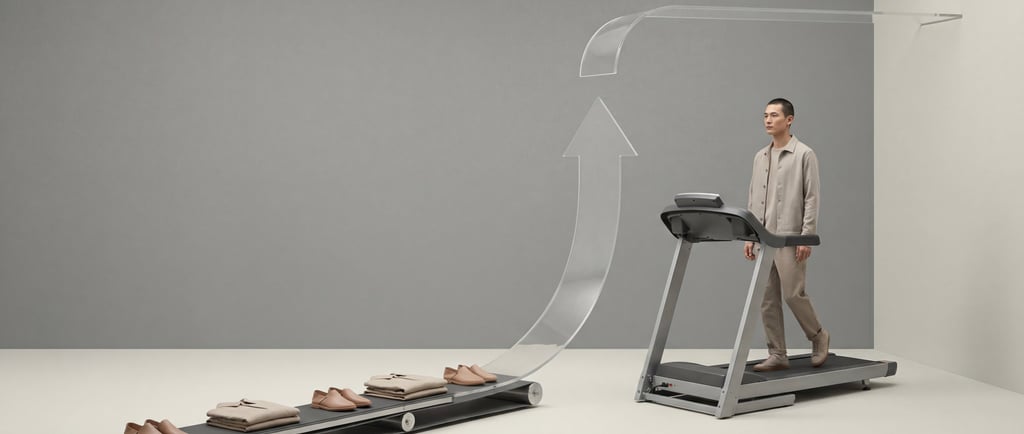
Many emerging apparel and footwear brands begin their journey without in-house design, development, or sourcing teams—and this is both a common and practical starting point. Limited resources, lean teams, and the need to validate the market often make outsourcing the most viable option, allowing founders to launch with lower upfront investment. However, if these gaps are not clearly acknowledged and actively managed, they can result in slower development cycles, reduced product clarity, higher costs, and increasing difficulty in scaling beyond the first few collections.
Key Difficulties Brands Face Without In-House Design, Development & Sourcing Teams
1. Reduced Control Over Product Execution
Without internal teams overseeing design and development, brand vision often passes through multiple external partners. This can lead to diluted design intent, inconsistent fit, or compromises in construction and finishing—especially when factories prioritize efficiency over brand specificity.
2. Communication Gaps and Misalignment
Design ideas must be translated into technical instructions, and without in-house expertise, this translation is often incomplete. Misunderstandings between founders, freelancers, and factories result in repeated clarifications, delayed samples, and unnecessary development loops.
3. Longer Development Timelines
External partners/indivisuals typically juggle multiple clients and prioritize larger, established brands. For early-stage labels, this can mean slower response times, extended sampling cycles, and delayed production schedules—ultimately affecting speed to market.
4. Increased Development and Sampling Costs
While outsourcing may appear cost-effective initially, lack of communication due to indirect contact between freelance resources can lead to repeated sampling, paid revisions, and avoidable mistakes. These hidden costs accumulate quickly and strain limited early-stage budgets.
5. Limited Ability to Innovate or Differentiate
Smaller brands without internal teams often rely on factory-led solutions. As a result, products may lean toward safe, standard constructions, making it harder to create meaningful differentiation or unique brand signatures—particularly in footwear.
6. Weak Sourcing Visibility and Negotiation Power
Without a sourcing team, founders may lack insight into material markets, supplier options, and fair pricing. This often leads to higher costs, fewer material choices, and reduced flexibility in meeting target margins.
7. Inconsistent Quality Control
When each segments are handled separately and quality standards are managed externally, consistency becomes harder to maintain. Differences between design thoughts, approved samples and bulk production can emerge, leading to customer complaints, returns, and brand trust issues.
8. Over-Dependency on Single Vendors
Early brands frequently rely on one factory or agent. Without sourcing expertise or alternatives, this dependency increases risk—any delay, pricing change, or capacity issue can disrupt the entire business.
9. Slower Learning and Capability Building
Without a complete team, brands accumulate operational knowledge more slowly. Mistakes are often repeated, processes evolve gradually, and long-term product strategy remains underdeveloped.
10. Challenges in Scaling Beyond Initial Collections
What works for small production runs often fails at scale. Without internal or complete systems and expertise, brands may struggle with consistency, cost control, and process efficiency as order volumes grow.
Common Practices Founders Use to Overcome These Challenges
Despite these hurdles, many successful brands navigate this phase effectively by adopting practical, lean strategies:
1. Hiring Freelance Experts as Extensions of the Brand
Founders often work with experienced freelance technical designers, developers, or sourcing consultants on a project basis to bridge knowledge gaps without full-time overhead.
2. Partnering With Development-Focused Manufacturers
Choosing factories that offer in-house pattern making, sampling, and development support helps slightly accelerate timelines.
3. Simplifying Early Collections
Founders limit styles, materials, and variations in early drops, allowing partners to focus on execution rather than innovation.
4. Designing From Proven Foundations
Using existing styles allows brands to move faster while learning the development process.
6. Planning for Gradual In-House Capability
As revenue grows, many brands slowly bring critical roles—such as technical design or sourcing—closer to the business to regain control and support scale.
Closing Thought
Starting without in-house design, development, or sourcing teams is not a disadvantage—it is a phase. Brands that recognize the limitations of this phase and adopt the right external partnerships and internal discipline are better positioned to move faster, control costs, and build scalable product foundations for long-term growth.
© 2024. All rights reserved @ Cavitystudios.com


Office
Cavity Studios — Office
39 West End Court
West End Lane, Stroke Poges SL2 4NB
London, United Kingdom +44 7301 845853
✉️ hello@cavitystudios.com
Studio
Cavity Studios — Design Studios
Plot#12-E, First Floor.Block A-1.
Punjab Government Employees Cooperative Society(PGECHS) Phase-1.
PIA Road, Lahore, Pakistan.
✉️ marketing@cavitystudios.com
Office
Cavity Studios — Sourcing Office
Wuhan, People's Republic of China.
✉️ sourcing@cavitystudios.com